Pocket Duty
Ten-minute firefights against squads of soldiers, on nine maps.
By evan. Verified by Pocket Nexus.
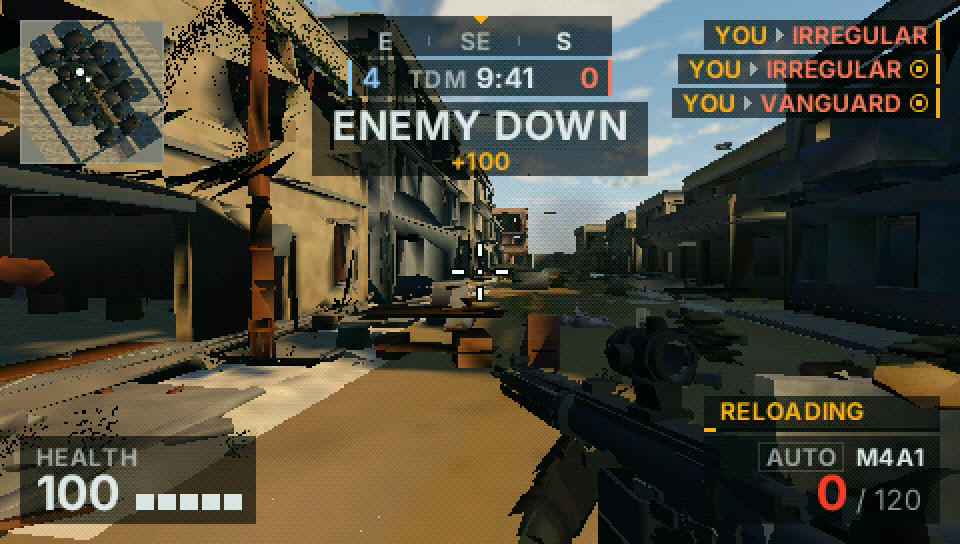
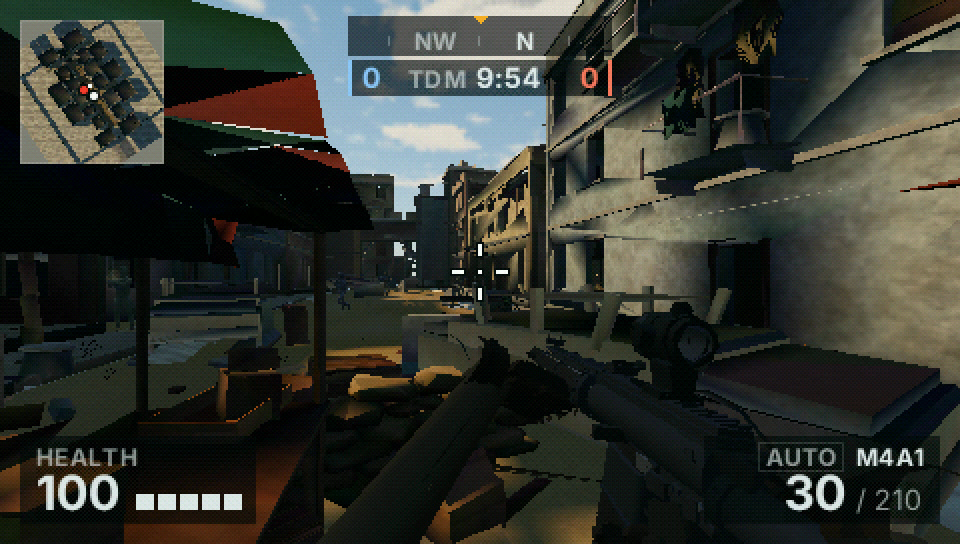
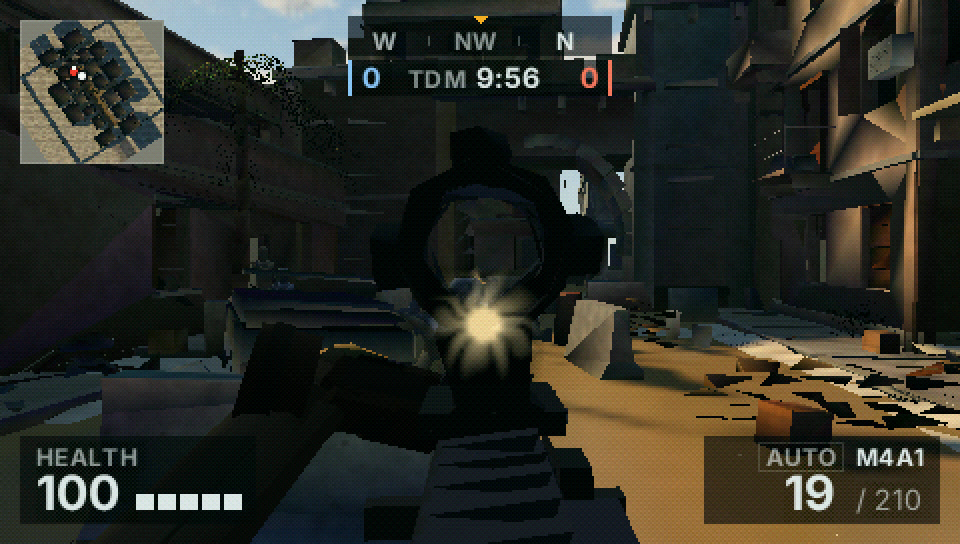
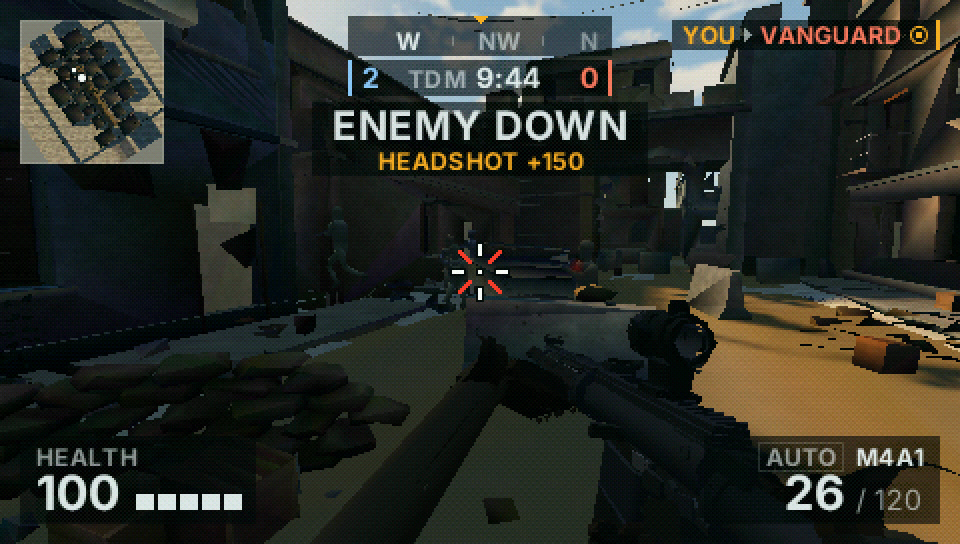
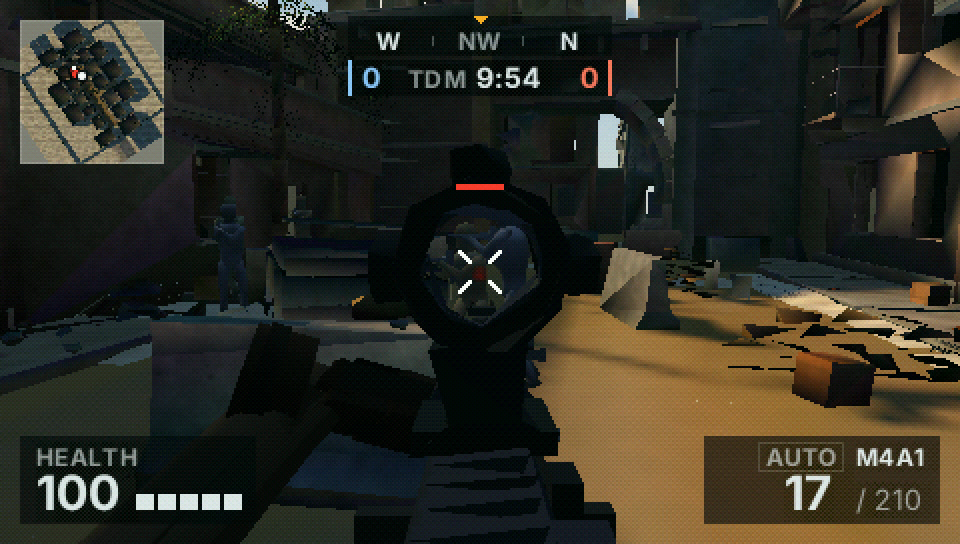
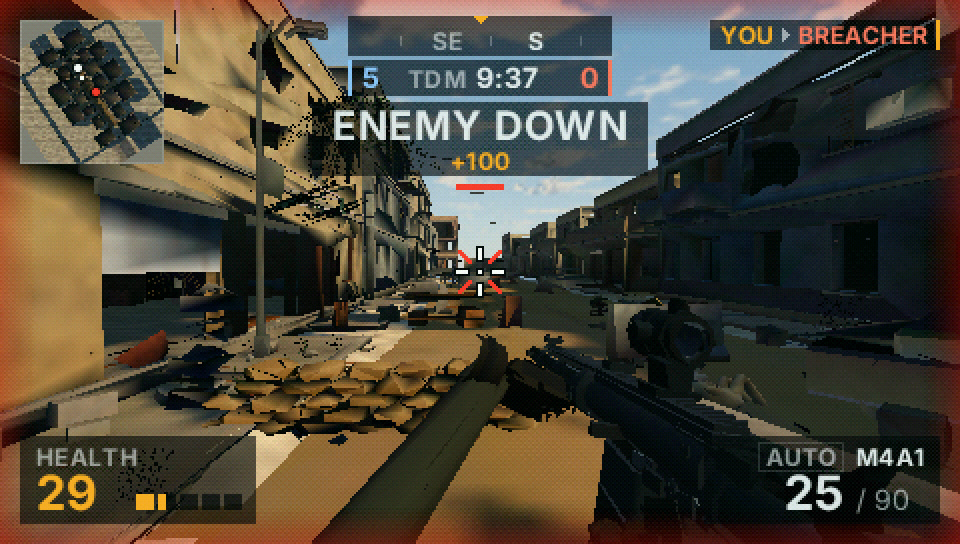
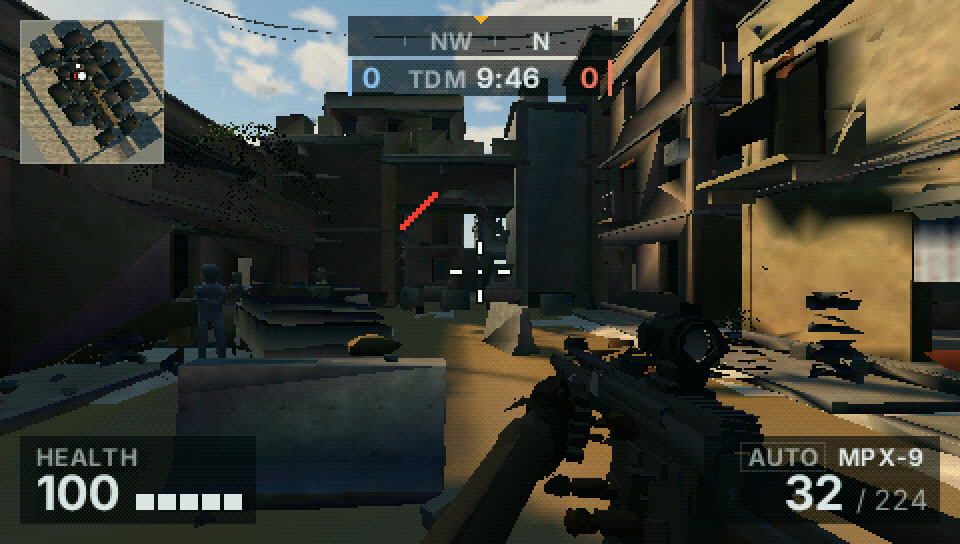
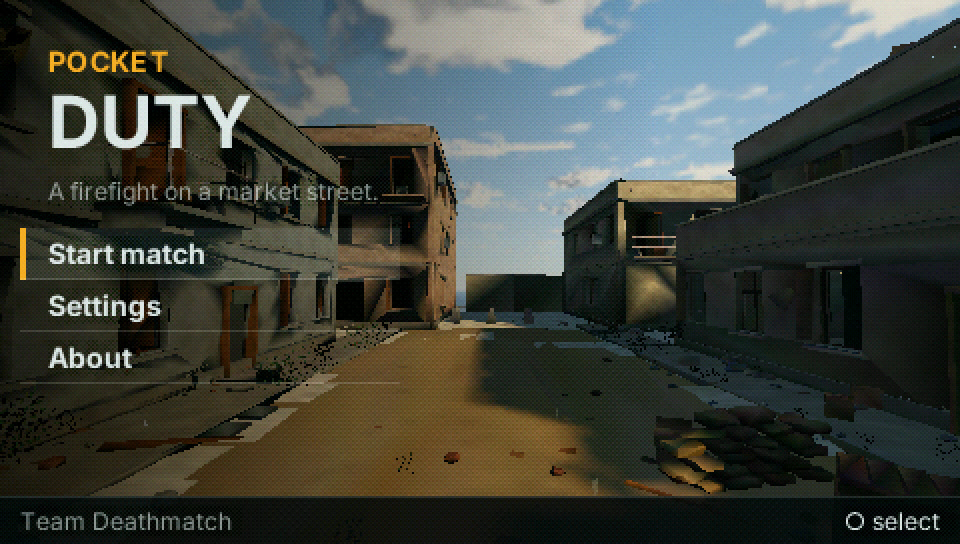
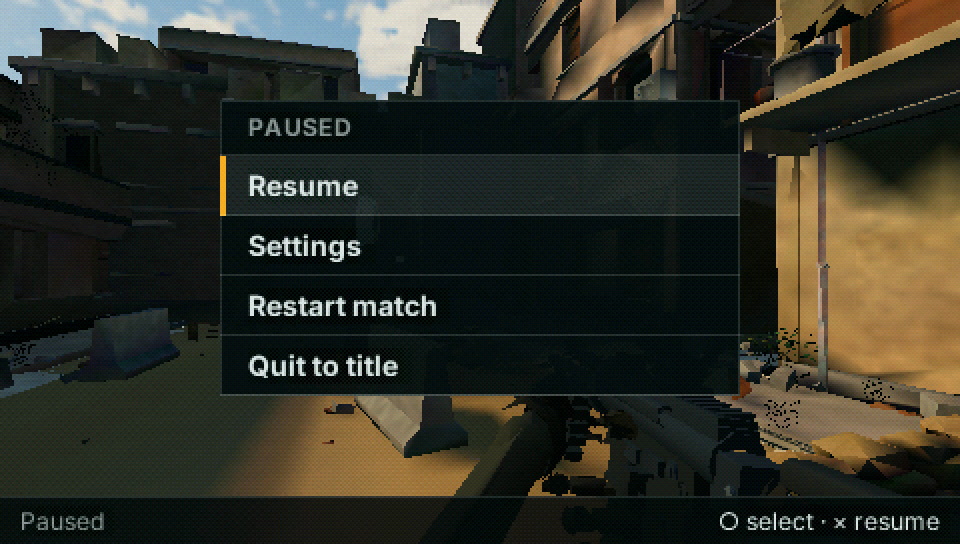
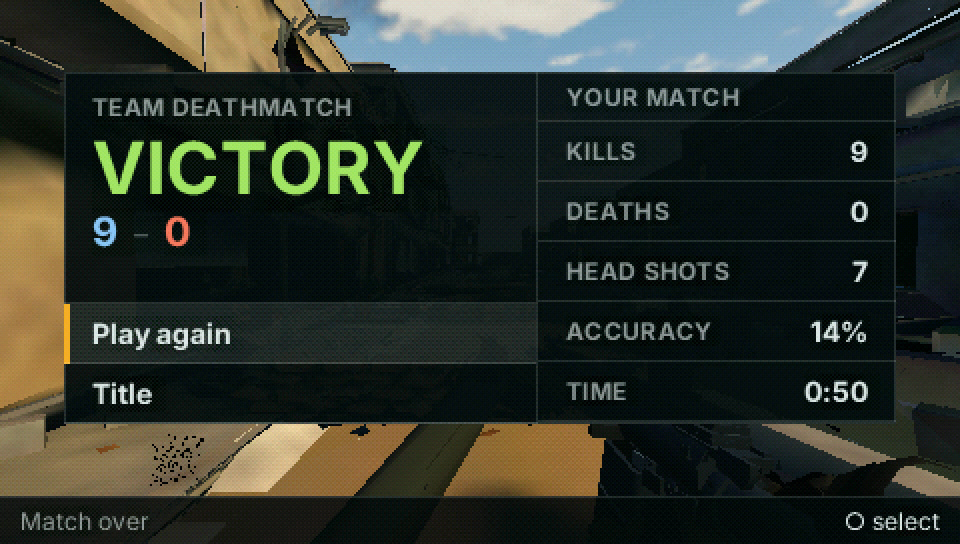
These clips and pictures were captured from the game's builds for the devices.
Download
For your device
Source code
Every package here is built from this source, and a remix starts from it.
All versionsPast versions come with the membership.
Free with a Pocket Studio account. Install guide.
Pocket Duty is a first-person shooter. A match is Team Deathmatch on one of nine maps: ten minutes, first side to 30. You are one side. The other is soldiers in squads of three, who take cover, flank, and come looking for you when they have lost you for 14 seconds.
The first map is the market street of the game Pocket Duty is made from. The other eight are places of our own, each typed by hand as a plan: a walled desert town, an older one with a sunken way under its road, a freight hall at dusk, a house of offices under snow, ruins over a river, a works in red rock, a hill village of alleys and a rail yard. Where one floor stands over another the soldiers walk both, and they climb ladders as you do. The map list on the title screen changes the map.
You carry three weapons, an M4A1, an MPX-9 and a P-19, each with its own recoil pattern. Raising the sights turns the view onto the nearest soldier in front of you. You can jump, crouch, slide and climb a ledge, and your health comes back when you stay out of fire.
It is made from Claude of Duty by mshumer (github.com/mshumer/Claude-of-Duty, MIT), a browser game whose street, soldiers, weapons and sounds are built by code when it starts. Pocket Duty runs that game once on a computer, records what it builds, and compiles the record for each console: the light of each vertex, three levels of detail, and for each place the list of what can be seen from it.
On a PSP it draws 480 × 272 at 30 frames a second through the console's fixed-function GPU, with the interface drawn over it by PocketJS; a whole ten-minute match on the market street measured 29.9 frames a second on a console. It needs a PSP-2000 or a later model. On a Nintendo 3DS it draws the upper screen at 400 × 240 and shows the map on the lower one. On a PS Vita it draws 960 × 544 at 60 frames a second, with pictures in true colour.